

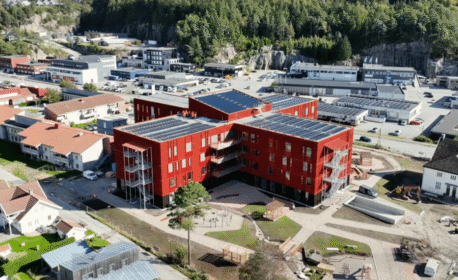
The project in photos!
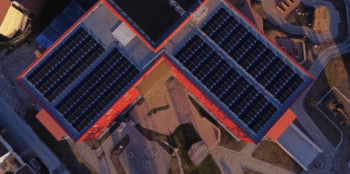
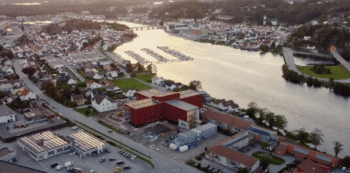
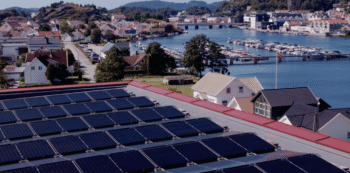



A building that uses 85% less energy… and produces more than it consumes
The Lindesnes health center delivers outstanding performance: its energy consumption is reduced by more than 80% compared to regulatory standards — about 85% less than a conventional healthcare building. Even better, the facility is strongly energy-positive.
Across 12,500 m², annual needs are:
• 472,052 kWh/year for heating,
• 155,798 kWh/year for domestic hot water,
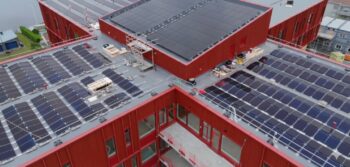
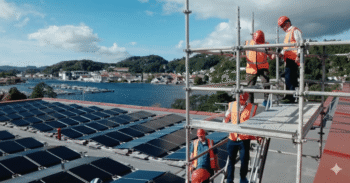
while total solar production (PV + PV-T) reaches 783,427 kWh/year, making the building energy-positive.
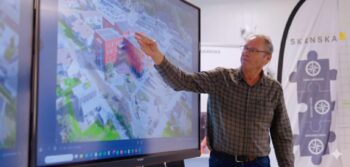
As Bjørn Jenssen, Senior Advisor at Skanska, points out:
“I would say there are actually two big winners here: the municipality of Lindesnes, and then the community. Overnight, the energy bill is virtually eliminated. That money can then be used for other things. It makes more sense, doesn’t it? And it frees up energy for everyone else.”
Solving the problem at the source: an integrated and intelligent infrastructure
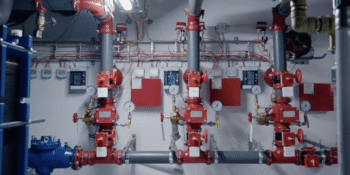
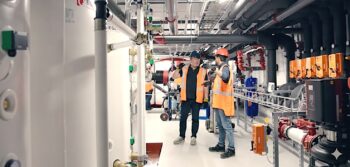
Rather than building costly new power lines and damaging nature with heavy infrastructure, the project addresses the energy challenge directly on-site. The building produces, stores, and distributes its own energy through a unique combination of technologies:
-
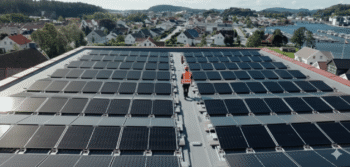
112 Dualsun PVT solar panels (SPRING BOOST), producing both electricity and heat.
-
Geothermal boreholes, serving as a heat source in winter and a heat sink in summer.
-
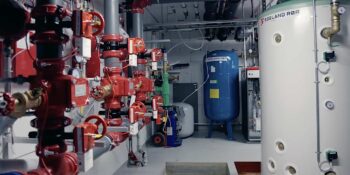
Industrial heat pump using ammonia (R717), a natural refrigerant with a GWP of 0, equipped with a desuperheater to produce high-temperature domestic hot water with maximum efficiency.
-
Intelligent thermal storage, consisting of short-term thermal batteries and dedicated DHW tanks ensuring stable hot water at 60°C.
-
Low-exergy heating and cooling system, delivering heating at very low temperatures (≤35°C) and cooling at high temperatures (≥15°C), significantly reducing the workload of the heat pump.
-
90 electric vehicle charging stations, powered free of charge by surplus solar energy.
In this project, the application goes far beyond simple solar geothermal systems: depending on the temperature of the PVT panels, the thermal energy is routed to different storage levels:
-
High temperature: preheating domestic hot water,
-
Medium temperature: supplying the geothermal heat pump,
-
Low temperature: regenerating the geothermal boreholes.
An extremely fine thermal control system that enables unmatched performance.
Record performance thanks to Dualsun PV-T
Simulations show exceptional coefficients of performance:
-
SCOP (space heating): 6.6
-
SCOP (domestic hot water): 5.0
-
SCOP (overall system): 4.2 (including circulation pumps and distribution losses)
The study highlights a key point: without Dualsun PV-T panels, the geothermal borehole thermal balance would be negative.
The panels alone provide 491,595 kWh/year of thermal energy, offsetting winter extraction and maintaining stable, long-term ground temperatures and performance.
Record performance for a 24/7 facility
This project is particularly ambitious because it maintains a target consumption of approximately 42 kWh per m²—a level equivalent to the most energy-efficient office buildings in the world—despite the fact that a health center operates continuously, day and night.
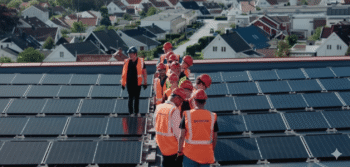
Saqib Javed, a researcher at the National Renewable Energy Laboratory (NREL) who attended the commissioning, notes:
“This is a new benchmark for occupant thermal comfort. Operating costs will be low, with significant storage and use of natural energy. So, in terms of both physical comfort and building operating conditions, this is a very unique and ambitious project.”
An International Benchmark with Major Societal Impact
The success is so significant that the site hosts international delegations every week. Kyrre Jordbakke, Chief Executive of Lindesnes Municipality, confirms:
“This building is so efficient that we are seeing significant long-term savings in operating costs. Visitors see that it is possible to build a health center that is energy-autonomous, meaning it has a minimal impact on society.”
A National Potential of 15 TWh
This model is not just a local success; it represents hope for the global energy transition. By scaling such solutions, Norway could save 15 terawatt-hours (TWh) per year, representing more than 10% of its total electricity consumption.
A Point of Pride for Dualsun in Norway
Participating in this project with Dualsun Nordics alongside Skanska is a true source of pride for Dualsun. In Lindesnes, this project demonstrates that it is possible to reconcile medical performance, occupant comfort, and extreme budgetary sobriety. It is an inspiring demonstration of what modern energy should look like!


