

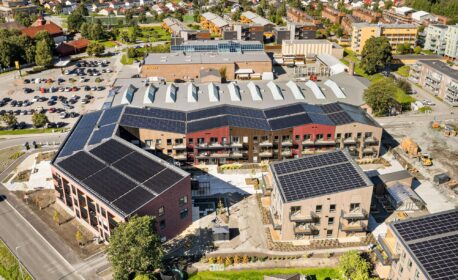
This project in photos!
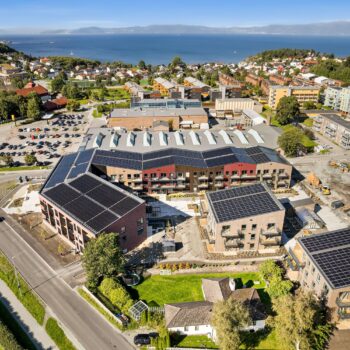
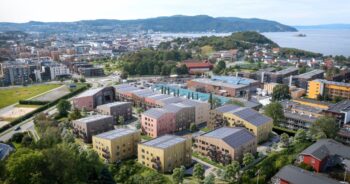


A Building That Produces More Energy Than It Consumes
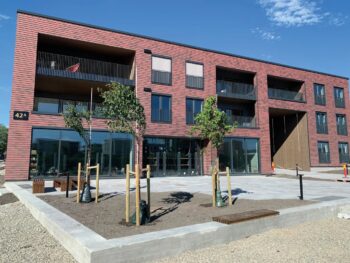
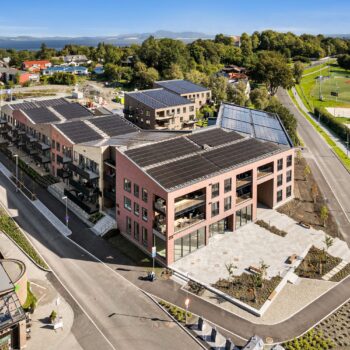
With 96 apartments across 5 buildings, Powerhouse Lade is designed to achieve a positive energy balance of 2 kWh/m²/year, accounting for the entire building lifecycle — from construction and operation to deconstruction. It also achieves a 65% reduction in CO₂ emissions compared to conventional buildings, including emissions from material production.
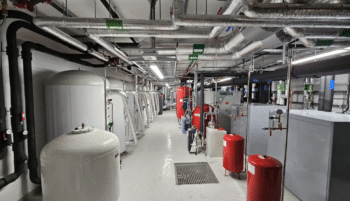
This performance is made possible through a next-generation hybrid energy system, combining Dualsun SPRING hybrid solar panels and deep geothermal boreholes, operated by an energy station developed by Bravida.
“This project demonstrates what we can achieve when we combine strong technical expertise with future-focused technologies,” says Geir Stamnsve, Project Manager at Bravida in Trondheim.
The Technological Synergy: Hybrid Solar + Geothermal
At the heart of the system are 1,080 solar panels, including 460 Dualsun SPRING hybrid panels. These innovative panels simultaneously generate photovoltaic electricity and thermal energy, and are coupled with 27 geothermal boreholes, each 300 meters deep.
“The heat captured by the panels is used to preheat the water feeding the heat pumps. In summer, this heat is also stored in the geothermal wells,” explains Geir Ole Gjøgali, Technical Director at NTE Marked AS.
This seasonal thermal storage allows the heat pumps to operate at very high efficiency in winter, when energy demand peaks and solar radiation is lowest.
Key Performance Data
-
Overall system efficiency: 3:1 (every kWh of electricity yields 3 kWh of thermal energy)
-
Dualsun SPRING hybrid panels: +8–10% performance gain due to active cooling
-
Seasonal thermal storage: geothermal wells act as underground heat batteries
-
Self-production and redistribution: surplus energy powers apartments and EV charging stations
The system is continuously monitored via a central control system (BMS), enabling dynamic optimization.
“We track in real time how much heat is produced, stored, and consumed. This level of monitoring is key to system efficiency,” adds Geir Stamnsve.
A Model Construction Site and Living Energy Lab
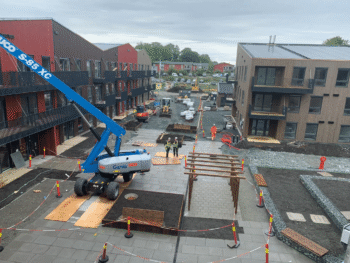
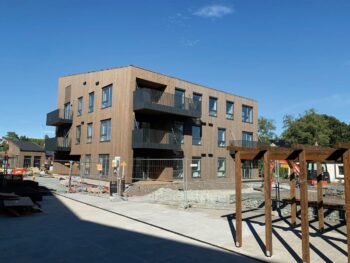
Built on the historic site of Trondheim’s former Lade nursery, the project uses low-carbon materials, including low-emission concrete and recycled components. The first building was delivered in 2024, with the second phase under construction and scheduled for completion in 2026.
This initiative goes beyond the use of existing technologies — it actively integrates, tests, and validates a fully life-cycle energy-positive model, including embedded material carbon, which is still rare in the building industry.
“Powerhouse Lade – Gartnersletta is a full-scale demonstration of what tomorrow’s building standards will look like,” says Kim Bundgård, Project Director at Skanska.
A Replicable Model for Future Living
The project proves that combining Dualsun hybrid solar panels with geothermal energy is not only technically feasible but also highly efficient and scalable to other climatic contexts. It paves the way for a new generation of buildings that produce, store, and optimize their own energy locally.
➡️ Learn more about solar-geothermal hybrid energy.
📸 Photo credits: Skanska and NTE


